

Barndominiums in Georgia: Rules, Costs, and Pitfalls
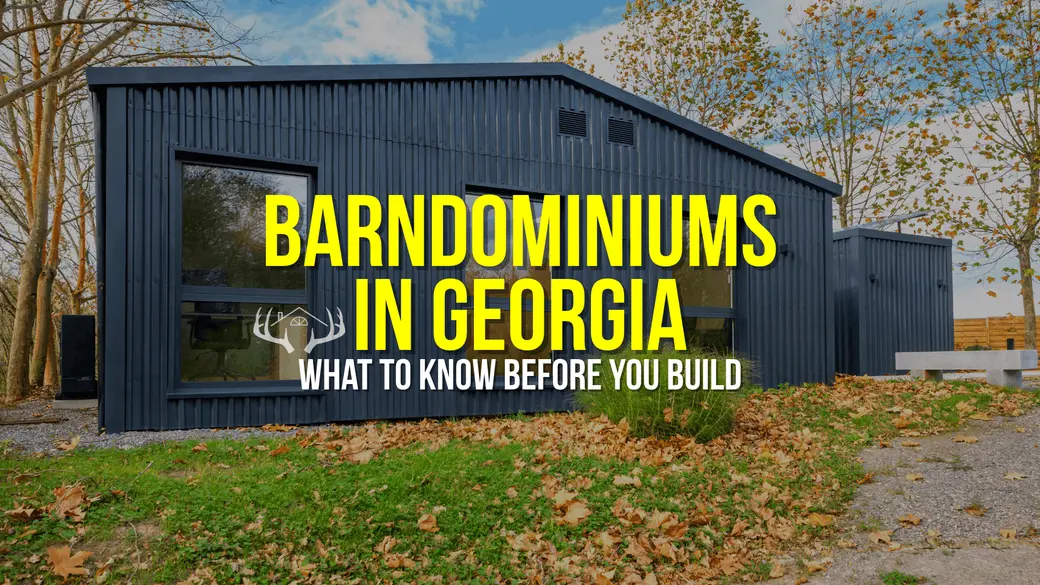
Barndominiums in Georgia: Rules, Costs, and Pitfalls
Yes, you can live in a barndominium in Georgia, but only if it is permitted, built to residential code, and sited on land where the zoning allows it. The three things that trip up most buyers are zoning, utilities, and financing, and all three should be sorted out before you close on the land, not after. If you are researching a barndo build on rural acreage, this guide walks through what to check first and where the surprises usually hide.
Are barndominiums legal in Georgia?
Yes. A barndominium can be a full-time primary residence in Georgia as long as it is permitted as a dwelling and built to the state's residential building codes. The catch is that "barn" is a style, not a legal category. Once a building has bedrooms, bathrooms, and a kitchen, the county treats it as a house, whatever the exterior looks like.
That means a building permit, plan review, staged inspections, and a Certificate of Occupancy at the end. Trying to classify a living space as an agricultural building to dodge those steps is a classic and expensive mistake. It can block utilities, financing, insurance, and eventually a sale. Agricultural exemptions in Georgia are narrow and generally do not cover places people sleep.
Does zoning allow a barndominium on my land?
It depends on the county and the zoning district. Agricultural and agricultural-residential zoning usually allows a barndominium without much fuss, though you should still confirm with the planning office in writing. Standard residential zoning can add rules about appearance, minimum square footage, or foundation type, and a metal-sided building may need a variance.
Then there are subdivisions. Many HOA covenants prohibit metal buildings outright, and a board can reject plans on looks alone. If the lot sits inside a community with covenants, read them before you make an offer. Setbacks matter too, since they vary widely from county to county and decide where on the parcel the building can actually sit. Our guide to zoning laws and restrictions when buying land in Georgia covers the questions to ask before you commit to a tract.
What permits and inspections will I need?
Expect a building permit at minimum. Depending on the site, you may also need separate permits for septic, a private well, electrical, plumbing, mechanical work, a driveway, and erosion control. Georgia sets statewide minimum codes, and your county handles zoning and permitting on top of that.
Inspections happen in stages: foundation, framing, rough-in work for electrical and plumbing, insulation, and a final inspection. Larger clear-span designs, mezzanines, and attached shops may need engineered plans. Incomplete applications are the most common cause of delay, so a complete set of site plans, structural details, and foundation information up front saves weeks. Budget a few months from application to groundbreaking, and ask the county what its current timeline looks like.
How much does it cost to build a barndominium in Georgia?
Barndominiums can be quicker and cheaper to put up than a traditional stick-built house, but the shell is only part of the bill. Permit fees for a typical rural residential project often run from several hundred dollars to a couple thousand, and that is before any of the big line items.
The costs that surprise people are the ones that have nothing to do with the metal building. Land clearing, grading, drainage, a septic system, a well, power to the site, and a foundation that suits Georgia's red clay all add up. Interior finishing is usually where the budget really moves, because living space costs far more to finish than a shop or storage bay. Plan for HVAC, insulation, engineering, inspections, and a contingency cushion too. For a full picture of what it takes to build on your own parcel, see our breakdown of the cost to build a house on your own land in Georgia, because most of those numbers apply to a barndo as well.
Do I need a septic system and well?
If the property is not on public sewer and water, yes. Rural land often relies on both, and neither one is optional for a home. Septic approval depends on soil testing, and the results can change where the building goes or whether the lot is buildable at all. Wells and septic fields also need a set distance between them.
Do this homework before closing. A lot that looks perfect can fail a soil evaluation, and finding out after you own it is a painful way to learn. Our guide to getting a well and septic approved on Georgia land explains the process step by step.
How does Georgia's climate affect a barndominium?
Georgia is hot and humid, and metal buildings in humid climates can collect condensation if they are not designed for it. That is a real problem, not a minor one. Poor insulation and ventilation lead to dripping, rust, and mold, so a proper vapor strategy and correctly sized HVAC matter. Skipping dehumidification to save money tends to cost more later.
Heavy rain makes drainage a priority on clay soil. Coastal counties add wind-load requirements that raise the engineering and material costs. No builder should promise a hurricane-proof building, and if one does, that is a good reason to keep shopping.
Can you get a mortgage for a barndominium?
Often yes, but not every lender will touch one. Whether a loan works depends on the loan program, the lender's comfort with the property type, and the appraisal. Some lenders treat barndominiums as unusual properties and may add requirements or decline them outright, while others have plenty of experience with them. It pays to talk to more than one lender early, including local banks and credit unions.
Appraisal is the sticking point. Appraisers value a home by comparing it with similar recent sales nearby, and barndominiums often lack close comparables. Without enough support for the value, a loan can stall. Buying in an area where barndominiums are already common usually makes this easier.
If you are building rather than buying one that already exists, a construction-to-permanent loan is a common route, where the loan converts to a regular mortgage once the Certificate of Occupancy is issued. Lenders look at the same fundamentals they always do: credit, income, debt, down payment, and whether the property meets program requirements. A permitted, code-compliant barndo with a Certificate of Occupancy is much easier to finance than anything built outside the rules. If you want to talk through options, our lender recommendations page is a good place to start.
Is insurance harder to get on a barndominium?
It can be. Some insurers are unfamiliar with barndominiums and may misclassify them, price them oddly, or decline coverage. Metal construction can help with fire risk, but that does not always show up in the quote. Get insurance quotes while you are still planning, not the week before closing, so a coverage problem does not surprise you after the foundation is poured.
Will a barndominium hold its resale value?
A permitted, properly built barndominium with a Certificate of Occupancy is far easier to sell and finance than one with questions hanging over it. The shrinking pool of buyers is the real risk. Barndos appeal to a particular type of buyer, and the lack of comparable sales can make pricing harder. Land, acreage, and location tend to drive value more than the building style does.
What mistakes should I avoid when buying land for a barndominium?
A few come up again and again:
- Buying land before confirming zoning, setbacks, and utility access with the county.
- Assuming an agricultural building can be lived in without residential approval.
- Relying on a verbal OK from an HOA instead of getting approval in writing.
- Undersizing HVAC or ignoring humidity control.
- Skipping engineering on large spans, mezzanines, or structural cuts.
- Waiting to talk to lenders and insurers until after the land purchase.
If you are still shopping for the right tract, browse our current land listings and bring the property address to the county before you write an offer.
Frequently Asked Questions
Can I build a barndominium anywhere in Georgia?
No. You can build a barndominium in Georgia only where local zoning, setbacks, HOA covenants, and utility access allow a single-family dwelling. Agricultural and agricultural-residential zones are usually the friendliest, but every county sets its own rules, so confirm with the planning office before buying land.
Do I need a permit to build a barndominium in Georgia?
Yes. A barndominium used as a home needs a residential building permit in Georgia, plus separate permits for septic, well, electrical, and other work as the site requires. It also needs staged inspections and a Certificate of Occupancy before anyone can legally move in.
Are barndominiums cheaper than regular houses in Georgia?
Sometimes. A barndominium shell can go up faster and for less than a conventional frame house, but site work, utilities, foundation, and interior finishing can erase the savings. The total depends on the land and the finish level more than on the building style.
Is it hard to finance a barndominium in Georgia?
It can be harder than a standard home, but it is often possible. Some lenders are more comfortable with barndominiums than others, and appraisals can be difficult because close comparable sales are rare. Talking to several lenders before you buy land gives you the clearest answer.
Can a barndominium be insured like a normal home?
Usually, but not always easily. Some insurers are unfamiliar with barndominiums and may decline them or classify them incorrectly. Ask for quotes during planning so you know what coverage will look like before construction starts.
Dekota Oechsle, REALTOR® and Mortgage Loan Originator, NMLS #2811815
Categories
Recent Posts


REALTOR® | Mortgage Loan Originator NMLS #2811815
+1(678) 215-8230 | dekota@movetogriffin.com