
Land Loans in Georgia: How Land Financing Works
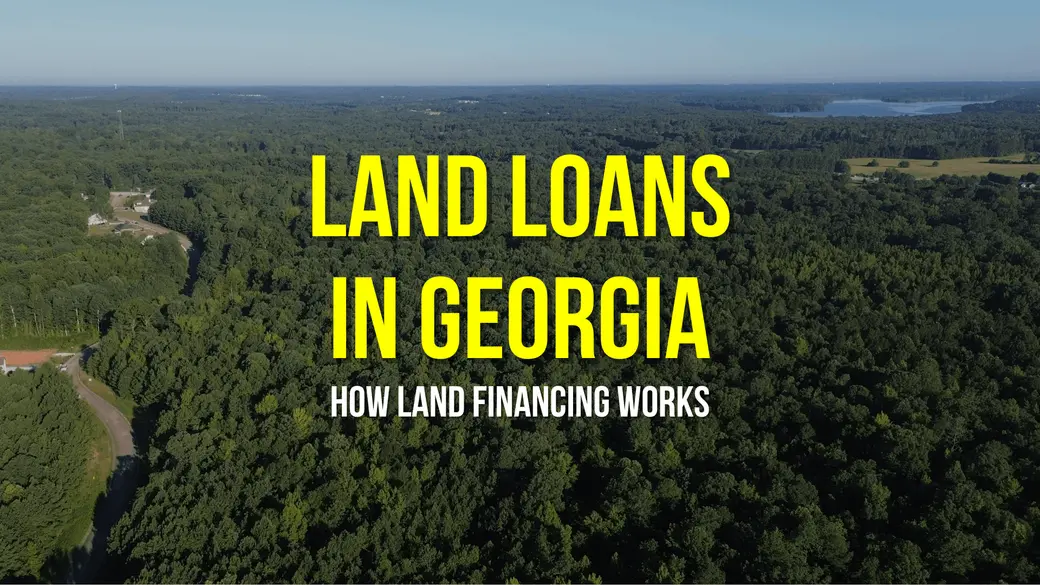
Land Loans in Georgia: How Land Financing Works
Financing raw land in Georgia works differently than financing a house. Lenders see vacant land as a bigger risk than a home with four walls and a roof, so they typically ask for a larger down payment, offer shorter loan terms, and evaluate the property itself more closely before approving anything. Understanding how that process works, and where the flexible options are, can save you from a lot of surprises once you find the right piece of ground.
If you've spent any time looking at land for sale in Georgia, you've probably noticed that most listings don't come with the same easy financing path as a move-in-ready home. That doesn't mean land is unaffordable. It means the path looks different, and knowing that path ahead of time puts you in a much stronger position when you're ready to make an offer.
How Is Financing Raw Land Different From a Home Mortgage?
A home mortgage is secured by a structure a lender can appraise, insure, and resell if something goes wrong. Raw land has none of that built-in security, so lenders treat it as a higher-risk loan and price it accordingly.
That typically shows up in three ways: a bigger down payment requirement, a shorter repayment term, and closer scrutiny of what you actually plan to do with the property. A lender wants to know whether you're planning to build soon, hold the land as an investment, or use it for recreation, because that plan affects how they view the risk.
What Types of Land Loans Are Available in Georgia?
Georgia buyers generally have four main paths to financing land: traditional bank or credit union loans, agricultural or Farm Credit loans, USDA rural loan programs, and owner financing arranged directly with the seller. Each fits a different kind of buyer and a different kind of land.
- Traditional bank and credit union loans. These work well for buyers with strong credit and a clear plan, but they tend to come with the strictest down payment requirements of the group.
- Farm Credit and agricultural lenders. Institutions that specialize in rural Georgia land, timberland, and agricultural property often understand raw acreage better than a general consumer bank does, and can be more flexible on terms as a result.
- USDA rural loan programs. Certain rural areas in Georgia qualify for USDA-backed financing, which can help buyers with more limited cash on hand, though the property and buyer both have to meet specific eligibility rules.
- Owner financing. Especially common in the Georgia land market, this is where the seller acts as the lender. It can mean a lower barrier to entry, but the terms are negotiated directly with the seller and vary widely from one deal to the next.
How Much Down Payment Do You Need for Land in Georgia?
Down payments on raw land in Georgia typically run higher than what you'd expect on a home purchase, and the exact amount depends heavily on the lender, the type of land, and your financial profile. Improved land with road access and utilities nearby usually requires less down than fully raw, undeveloped acreage.
A few things that tend to move the number up or down:
- Whether the land already has road frontage and utility access
- How the property is zoned and what it's approved for
- Your credit profile and existing debt
- Whether you have a documented plan to build within a defined timeframe
- Whether the lender specializes in land or is a general consumer bank
Because these terms are genuinely borrower-dependent, the only way to know your real number is to talk with a lender directly about your specific situation and the specific property. Running different scenarios through a mortgage calculator is a useful first step before that conversation, just to get a feel for how the numbers shift.
Why Do Land Loans Have Shorter Terms Than Home Loans?
Lenders shorten the loan term on raw land because the property doesn't generate income or appreciate the way a built home does, and it doesn't provide the same collateral value if the loan goes into default. A shorter term reduces the lender's exposure over time.
This is one of the biggest surprises for first-time land buyers. You might be used to thinking in 30-year mortgage terms, but land loans are frequently structured over a much shorter window. That changes your monthly payment math significantly, which is exactly why it's worth running the numbers before you fall in love with a specific parcel.
Before you get too far into a land search, it's worth reviewing financing options with a lender who understands land, not just homes, so you know what payment structure you're actually working with.
Does Buying Land Count as a Good Investment in Georgia?
Land can be a strong long-term investment in Georgia, particularly in growth corridors and areas with increasing demand for both residential and recreational property, but it behaves differently than a home purchase and shouldn't be evaluated the same way.
Unlike a house, raw land doesn't generate rental income or offer a mortgage interest deduction in the same way, and it can take longer to sell if the market shifts. What it does offer is flexibility: you can hold it, build on it, subdivide it, lease it for hunting or agriculture, or simply let it appreciate while you decide. For buyers thinking in decades rather than years, that flexibility is often the appeal.
What Do Lenders Look At Before Approving a Land Loan?
Lenders evaluate raw land loans by looking at the property itself as closely as they look at the borrower. That typically includes the intended use of the land, access and road frontage, utility availability, zoning, and whether there's a documented plan and timeline for development.
Documentation you should expect to gather includes:
- Recent tax returns and proof of income
- Bank statements
- A written plan for the land's intended use
- In many cases, a professional survey of the property
Having this ready before you make an offer speeds up the entire process and signals to both the seller and the lender that you're a serious, prepared buyer.
Frequently Asked Questions About Land Loans in Georgia
Is it hard to get a loan for raw land?
Getting a loan for raw land is generally more difficult than qualifying for a home mortgage because lenders view raw land as higher risk. Buyers with strong credit, a clear plan for the property, and a solid down payment tend to have the smoothest approval process.
How many years can you finance land for in Georgia?
Land loan terms in Georgia are typically shorter than the standard 30-year home mortgage, though the exact length depends on the lender, the type of land, and the loan program. Farm Credit and agricultural lenders sometimes offer longer terms than a traditional bank.
Can you get 100% financing on land in Georgia?
True 100% financing on raw land in Georgia is uncommon through traditional lenders. Owner financing arrangements can sometimes lower the cash needed upfront, but terms vary by seller and should be reviewed carefully before signing anything.
What credit score do you need for a land loan?
Credit score requirements for a land loan vary by lender and loan type, but because land loans are considered higher risk, most lenders look for stronger credit than they would for a standard home mortgage. Talking with a lender directly is the only way to know where you personally stand.
Is owner financing a good option for buying land in Georgia?
Owner financing can be a helpful option for buying land in Georgia if you don't fit the criteria for traditional bank financing, since terms are negotiated directly with the seller. It's important to have any owner-financed contract reviewed carefully, including the interest structure, payment schedule, and what happens if a payment is missed.
Should I get pre-qualified before looking at land?
Getting pre-qualified before looking at land in Georgia is a smart step, since knowing your realistic budget and loan structure before you start touring properties saves time and puts you in a stronger position to move quickly when you find the right parcel.
Thinking about financing a land purchase in Georgia? Explore current land listings to see what's available, or connect with a lender who understands how land financing actually works before you make an offer.
Dekota Oechsle, REALTOR® and Mortgage Loan Originator, NMLS #2811815
6588 Church St. Douglasville, GA 30134
Equal Housing Lender
Categories
Recent Posts





REALTOR® | Mortgage Loan Originator NMLS #2811815
+1(678) 215-8230 | dekota@movetogriffin.com