

What Is a Perc Test? Why It Matters Before Buying Land
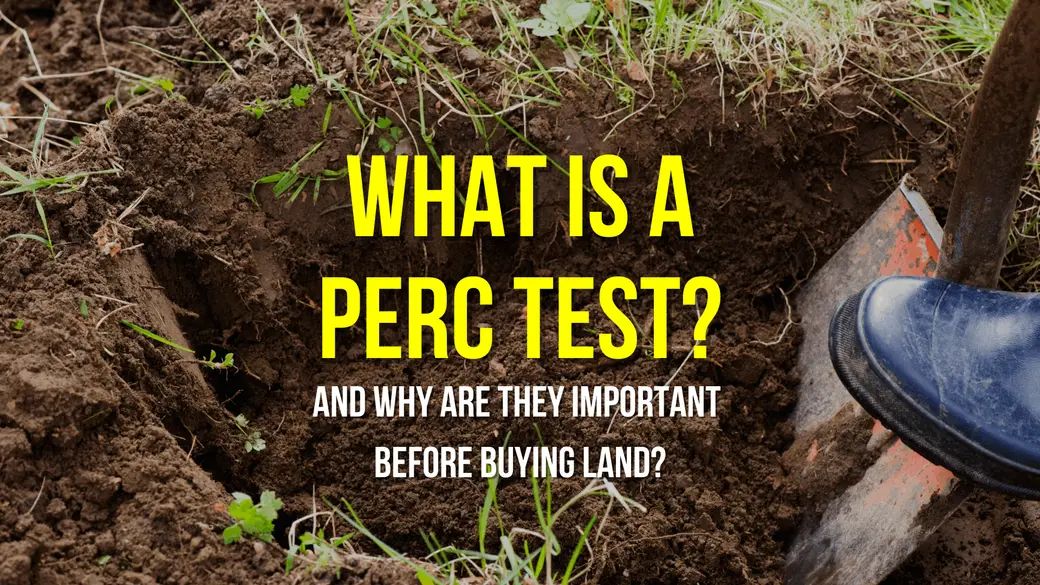
What Is a Perc Test? Why It Matters Before Buying Land
A perc test, short for percolation test, measures how quickly water drains through soil. When buying land to build a home, this test matters because it helps determine whether the property can support a septic system. If the land does not have access to public sewer, the soil must be able to absorb and filter wastewater safely. A failed or poor perc test can affect where you can build, what size home you can build, how much your septic system may cost, and whether the land is a smart purchase.
Buying land is exciting, but dirt is not just dirt. Two properties can look almost identical from the road and have completely different building potential once you start digging into soil, drainage, slope, and septic requirements. That is why a perc test is one of the most important due diligence steps for land buyers, investors, and anyone planning to build a home on rural or undeveloped property.
What Is a Perc Test?
A perc test evaluates the drainage rate of soil. In simple terms, it shows how fast water moves through the ground.
This matters because homes that are not connected to a municipal sewer system usually need an on-site septic system. A septic system treats wastewater from sinks, toilets, showers, washing machines, and other household plumbing. After wastewater leaves the home, it flows into a septic tank and then into a drain field, also called a leach field.
The drain field depends on soil to absorb and filter the liquid wastewater. If the soil drains too slowly, wastewater can back up, pool on the surface, or create unsanitary conditions. If the soil drains too quickly, wastewater may not be filtered properly before reaching groundwater.
A perc test helps answer one of the biggest questions land buyers should ask:
Can this property safely support the septic system needed for the home I want to build?
Why a Perc Test Matters When Buying Land
A perc test can affect the entire land purchase. It is not just a technical box to check. It can impact your budget, your building plans, your financing timeline, and the future resale value of the property.
Here are the biggest reasons it matters.
A Perc Test Helps Determine If the Land Is Buildable
Many buyers assume that if land is listed for sale, it can automatically be used for a home. That is not always the case.
A parcel may have road frontage, pretty trees, good topography, and plenty of acreage, but still have problems when it comes to septic approval. If the soil does not meet local septic requirements, the county may not approve a conventional septic system.
That can create a serious issue if your goal is to build a home.
A successful perc test does not guarantee that every part of the property is buildable, but it does give you important information about where a septic system may be possible. It can also help identify which portion of the land is most suitable for a homesite, driveway, well location, and drain field.
Before you fall in love with a tract of land, it is smart to verify whether the property can support your intended use.
Before you buy land, schedule a land-buying strategy call so you can review the major due diligence items before making an offer.
A Perc Test Affects Septic System Approval
If the property does not have public sewer access, septic approval becomes one of the most important steps in the building process.
Local health departments or environmental health offices typically regulate septic systems. Requirements vary by county, soil type, property layout, water table, slope, and proposed home size.
A perc test helps determine:
- Whether the soil can absorb wastewater properly
- Where the drain field may be located
- Whether a conventional septic system may work
- Whether an alternative septic system may be needed
- How much land must be reserved for the septic system
- Whether the proposed home size is realistic for the property
This is especially important in rural areas of Georgia, where many acreage properties rely on private wells and septic systems instead of public water and sewer.
If a property cannot support an approved septic system, building a home may become difficult, expensive, or impossible without an alternative solution.
A Perc Test Can Affect the Size of the Home You Can Build
One detail many buyers miss is that septic design is usually tied to the number of bedrooms in the home, not just the number of bathrooms.
A buyer may walk a property imagining a four-bedroom home, guest suite, detached garage, and future pool. But if the land only supports a smaller septic system, the county may limit the home to fewer bedrooms than planned.
That matters for both lifestyle and resale.
For example, if your long-term plan is to build a four-bedroom family home, but the soil only supports a two-bedroom septic system, that property may not fit your goals. It may still be useful for another buyer, a smaller cabin, a recreational tract, or a different investment plan, but it may not work for your intended home.
This is why land buyers should think beyond acreage and price. The real question is not just “How many acres am I buying?” The better question is “Can this land support the home, utilities, and layout I actually want?”
How a Perc Test Works
The exact process depends on local rules, soil conditions, and who performs the test. In general, a perc test involves digging test holes in the proposed septic drain field area and measuring how quickly water drains through the soil.
A typical process may include:
- Selecting the proposed septic area
- Digging one or more test holes
- Reviewing the soil profile
- Filling the holes with water
- Allowing the soil to soak
- Measuring how quickly the water level drops
- Calculating the percolation rate
- Preparing a report or submitting results to the county
The result is usually expressed as minutes per inch. That means the number of minutes it takes water to drop one inch in the test hole.
Fast drainage is not always better. Slow-draining clay soil may not absorb wastewater properly, but soil that drains too quickly may not filter wastewater long enough. The goal is soil that drains at an acceptable rate under local septic standards.
Who Performs a Perc Test?
A perc test should be handled by someone qualified under local requirements. Depending on the area, that may include:
- A licensed soil scientist
- A septic professional
- A land surveyor with septic experience
- An engineer
- A county health department representative
- An environmental health specialist
Some buyers try to perform a rough drainage test on their own before making an offer. That may provide a general idea of how wet or dry the soil seems, but it should not replace an official test. A DIY hole in the ground will not carry the same weight as a professional evaluation, and it may not satisfy county requirements for septic approval.
For land purchases, the safest approach is to ask the local health department what is required and confirm who is allowed to perform the test.
When Should You Get a Perc Test?
Ideally, a perc test should be completed during the due diligence period before closing on the land.
This gives the buyer time to evaluate whether the property fits the intended use before becoming locked into ownership. If the test results are poor, the buyer may be able to renegotiate, request additional information, explore alternative septic options, or terminate the contract if the agreement allows it.
- A perc test is especially important when:
- The land is undeveloped
- The property does not have public sewer access
- The seller has no recent septic documentation
- The property has never had a home on it
- The property has heavy clay, rock, wetlands, or low areas
- The land has steep slopes
- You plan to build a larger home
- You are buying land as an investment
- You need confidence before spending money on plans, surveys, or engineering
If the seller says the property “perked years ago,” ask for written documentation. Septic rules can change, previous tests may expire, and the old test may not match your intended home size or building location.
What Happens If Land Fails a Perc Test?
A failed perc test does not always mean the land is worthless. It does mean you need to slow down and understand your options before moving forward.
If the soil does not support a conventional septic system, possible next steps may include:
- Testing a different area of the property
- Adjusting the proposed homesite
- Reducing the planned home size
- Consulting a soil scientist or engineer
- Exploring an alternative septic system
- Reviewing county records for previous soil evaluations
- Determining whether public sewer is available nearby
- Reconsidering the property if the cost or risk is too high
Alternative septic systems can solve some problems, but they often cost more and may require additional maintenance. That can change the total budget for the land purchase.
For investors, a failed perc test may affect exit strategy. A tract that cannot support a home may still have value for recreation, timber, farming, hunting, or adjoining landowners, but it may not command the same price as a buildable homesite.
How a Perc Test Can Affect Land Value
Buildability is one of the biggest drivers of land value.
A beautiful piece of land with no septic approval may be less valuable than a smaller tract with a confirmed homesite, good access, and a documented septic location. Buyers are often willing to pay more for certainty. Perc test results can influence value because they affect:
- Whether the land can support a home
- The number of bedrooms allowed
- The cost of the septic system
- The location of the homesite
- The amount of usable land
- The risk a future buyer may inherit
- The timeline to build
For sellers, having septic documentation available can make a land listing more attractive. For buyers, reviewing that documentation can prevent expensive surprises.
https://georgialandandhome.com/land-listings
Search available land and acreage in the area, then review each property’s septic, access, zoning, and utility details before making a decision.
Perc Test vs Soil Test: Are They the Same?
People often use the terms “perc test” and “soil test” interchangeably, but they are not always the same thing.
A perc test focuses on how quickly water drains through soil. A soil evaluation may look more broadly at soil type, layers, seasonal water table, rock, clay content, slope, and suitability for septic design.
In some areas, a soil scientist may perform a more detailed soil analysis instead of a traditional perc test. The county may rely on that evaluation to determine whether the property can support septic.
The key point is this: do not get hung up only on the wording. Ask the local county office what documentation is needed for septic approval on that specific property.
Questions to Ask Before Buying Land
Before buying land to build a home, ask these questions early:
- Does the property have access to public sewer?
- If not, has the property had a perc test or soil evaluation?
- When was the test completed?
- Is the documentation still valid?
- What size home or number of bedrooms was approved?
- Where is the proposed septic area?
- Is there room for a replacement drain field?
- Are there wetlands, creeks, flood zones, or drainage issues?
- Will the well location conflict with the septic location?
- Are there easements that affect the homesite or septic area?
- What does the county require before issuing a building permit?
These questions help separate “pretty land” from “practical land.” A property can look great online and still have major limitations once you study the details.
Should You Include a Perc Test Contingency?
If you are buying undeveloped land, a perc test contingency can be a smart protection.
A contingency allows the purchase to depend on certain conditions being satisfied. In this case, the buyer may want the contract to depend on the property passing a perc test or soil evaluation suitable for the buyer’s intended home.
The wording matters. A vague contingency may not provide enough protection. The agreement should be clear about what the buyer needs to confirm, who pays for the test, when it must be completed, and what happens if the property does not meet the buyer’s intended use.
For example, a buyer planning to build a four-bedroom home should not simply ask, “Does the land perc?” The better question is whether the land can support a septic system for the size and type of home the buyer wants to build.
Real estate contracts and septic requirements vary, so buyers should get proper guidance before writing or accepting contract terms.
How Much Does a Perc Test Cost?
Perc test costs vary by location, property conditions, professional fees, and county requirements. A simple test may cost a few hundred dollars, while more involved testing, engineering, or alternative septic planning can cost more.
Costs may be affected by:
- Property size
- Number of test holes
- Soil conditions
- Slope and access
- County fees
- Professional fees
- Whether equipment is needed
- Whether additional engineering is required
The perc test itself is only one piece of the budget. If the property needs an alternative septic system, the total project cost can increase significantly. That is why buyers should investigate septic suitability before closing, not after.
If you are financing land or planning a construction loan, connect with lenders who understand land, septic, and build timelines.
Common Land Buyer Mistakes With Perc Tests
Many land buyers make the same mistakes because they focus on price, acreage, and appearance before studying the property’s function.
Watch out for these common issues:
- Assuming all land is buildable
- Trusting verbal statements without documentation
- Failing to check public sewer availability
- Skipping the perc test during due diligence
- Not confirming bedroom capacity
- Forgetting about replacement drain field areas
- Ignoring slope, wetlands, or drainage concerns
- Waiting until after closing to call the county
- Underestimating the cost of alternative septic systems
- Buying based only on the listing description
Good land due diligence is not about killing the deal. It is about knowing exactly what you are buying.
Final Thoughts: Do Not Skip the Perc Test
A perc test is one of the most important steps when buying land to build a home. It tells you whether the soil may support a septic system, where the drain field may go, and whether your building plans are realistic for the property.
For land buyers, the test can protect you from buying property that does not fit your goals. For investors, it can clarify risk, resale value, and development potential. For future homeowners, it can help you avoid spending money on land that may not support the home you have in mind.
Before you buy land, slow down and study the details. Review septic options, check county requirements, confirm utility access, and make sure the property can support your intended use.
https://georgialandandhome.com/buyer-guide
Download the home buyer guide to better understand the steps involved before buying land, building, or purchasing your next home.
FAQ: Perc Tests and Buying Land
What is a perc test in real estate?
A perc test is a soil drainage test used to determine whether land can support a septic system. It measures how quickly water drains through the soil, which helps determine whether wastewater from a septic system can be safely absorbed and filtered.
Why do I need a perc test before buying land?
You need a perc test before buying land if the property does not have public sewer access and you plan to build a home. The test helps determine whether the land can support a septic system, which may affect whether you can build, where you can build, and what size home may be approved. You would rather know that the property is not suitable for a septic system before buying the property.
Can you build on land that fails a perc test?
Sometimes, but it depends on the property and local regulations. A failed perc test may require a different homesite, additional testing, an engineered septic system, or an alternative septic design. In some cases, the property may not be practical for the buyer’s intended home.
Who pays for the perc test when buying land?
Who pays for the perc test is negotiable. In many land purchases, the buyer pays for inspections and due diligence testing. However, some sellers may already have a recent perc test or soil evaluation available. The contract should clearly state who is responsible for the cost.
How long is a perc test good for?
The valid period for a perc test depends on local rules. Some counties may require updated testing after a certain number of years, especially if regulations, property conditions, or building plans have changed. Always confirm current requirements with the county health department or environmental health office.
Is a perc test required for all land?
No. A perc test is typically not needed if the property has access to public sewer. It is most important for rural land, acreage, and undeveloped lots that need a private septic system.
Does a passed perc test guarantee I can build?
A passed perc test is important, but it does not guarantee full building approval by itself. You may still need zoning approval, driveway access, utility availability, building permits, well approval, floodplain review, and other site-specific approvals.
Can I do my own perc test?
You may be able to do a rough drainage check on your own, but an official perc test or soil evaluation usually must be completed by an approved professional or recognized by the local county office. For a land purchase, rely on official documentation rather than a DIY test.
What is a good perc rate for land?
A good perc rate depends on local septic standards, soil type, and the proposed septic system. The acceptable range can vary by county and system design. The best approach is to have the results reviewed by the local health department or a qualified septic professional.
Should I buy land before getting a perc test?
Buying land before getting a perc test can be risky if your goal is to build. If the land does not support a septic system, your plans may become much more expensive or may not work at all. When possible, complete septic due diligence before closing or include contract protections that give you time to investigate.
Categories
Recent Posts









REALTOR® | Mortgage Loan Originator NMLS #2811815
+1(678) 215-8230 | dekota@movetogriffin.com