USDA Land Loans in Georgia: Who Qualifies and How They Work
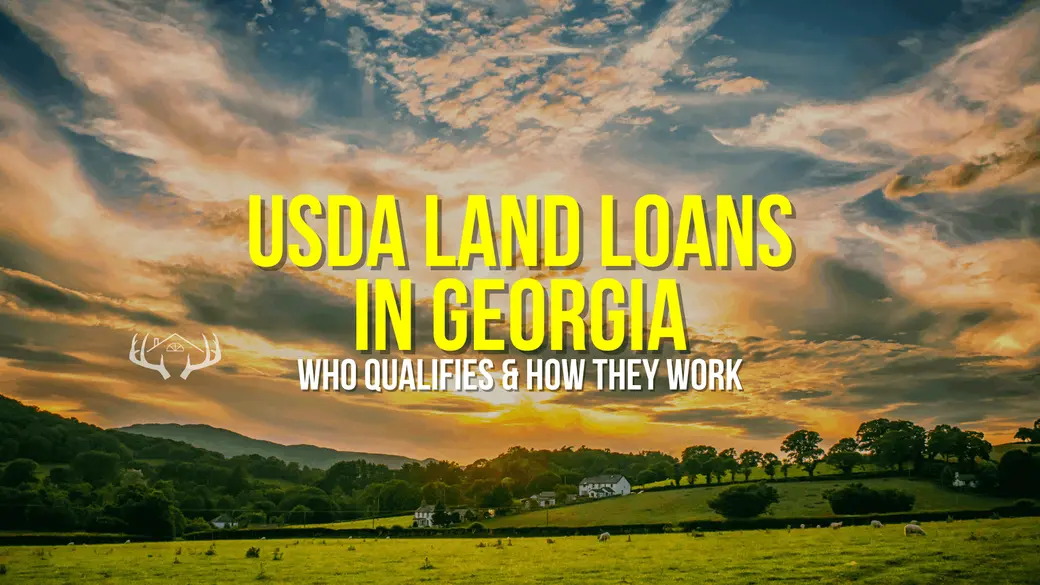
USDA Land Loans in Georgia: Who Qualifies and How They Work
USDA doesn't offer a loan built specifically to buy vacant land on its own. What it does offer, through the Single Family Housing Guaranteed Loan Program, is a way to finance a home on land you already own or land you're buying at the same time you build, and that financing can include the cost of the land itself. If you're picturing a "USDA land loan" as a standalone product, it doesn't exist. The more useful question is how USDA treats land inside a purchase or construction transaction, and that's where the real opportunity is for Georgia buyers.
Can You Get a USDA Loan Just to Buy Land in Georgia?
No. USDA guidelines specifically exclude vacant land as a standalone purchase. The loan has to finance a dwelling, either one that already exists or one being built right after closing, and land sitting on its own with no home attached and no construction plan in place doesn't meet that requirement, no matter how strong the buyer's credit or income looks.
This is written directly into USDA's property eligibility rules: the site can't have income-producing land used principally for agricultural, farming, or commercial purposes, and vacant land on its own falls into that ineligible category. A lot of the confusion online comes from "USDA loan" being used loosely to describe any kind of rural financing, when in reality the program is built around housing, not land as an investment.
How Does USDA Financing Work If You Already Own the Land?
If you already own the land, outright or with a mortgage still on it, USDA treats a new home built on that property as a purchase transaction rather than a refinance. That distinction matters because it opens the door to financing the build itself, and if there's still a balance owed on the land, that payoff can be rolled into the new guaranteed loan instead of being handled separately.
Owning an empty lot doesn't disqualify you from USDA financing on a different property either. Land without a dwelling on it isn't treated the same as a home you already own, so it doesn't count against you the way an existing house would when USDA looks at your overall eligibility.
Can USDA Loans Cover Buying Land and Building a Home Together in Georgia?
Yes, through USDA's single-close construction-to-permanent option. This lets a Georgia buyer wrap the acquisition cost of the land, the payoff of any existing balance owed on it, and the hard costs of construction into one guaranteed loan with a single closing, instead of financing land separately and refinancing into a permanent mortgage once the home is finished.
There are two ways this can be structured:
- An interest-only payment period during construction, with the loan reamortized once the home is complete.
- A structure that begins amortizing immediately, using a reserve to cover payments through the construction period, which allows the loan to be sold on the secondary market before construction wraps up.
Both options reduce the transaction down to one closing instead of two, which saves on closing costs and removes the risk of a second approval process after construction ends. If you're comparing this against financing raw land on its own first, it's worth understanding how standalone land loans work before deciding which path fits your timeline.
Who Qualifies for USDA Financing in Georgia?
Qualifying comes down to four things: household income under the local limit, an eligible rural location, a primary residence (not an investment or rental purchase), and a credit and income history a lender can document as stable. There's no down payment requirement built into the program, which is part of why it's worth understanding even for buyers who assumed financing land and a build was out of reach.
Income limits are set by county and household size, and most of Georgia falls in the six-figure range for a household of one to four, with higher limits for larger households. Because these limits are updated periodically and vary by county, especially near the Atlanta metro, the only reliable way to confirm eligibility for a specific household is to check the current figure for that county rather than rely on a number that may already be out of date.
On credit, USDA's handbook doesn't set one universal minimum score. Applications run through an automated underwriting system that reviews the full credit picture, including payment history and account age, rather than screening on a single cutoff. Buyers with limited or thin credit files aren't automatically excluded, but the only way to know where a specific credit profile lands is to talk with a lender directly.
Which Areas of Georgia Are USDA-Eligible?
Most of Georgia outside the immediate metro cores of Atlanta, Augusta, Savannah, Columbus, and Macon qualifies as rural under USDA's definition, and that definition is broader than most buyers expect. It covers a lot of small towns and unincorporated areas that still offer a reasonable commute into a larger city, not just the deep countryside.
Eligibility is determined address by address and shifts periodically as areas grow, so a property that qualified a few years ago isn't guaranteed to qualify today. Checking a specific address on USDA's eligibility map before falling in love with a piece of land or a build site is a step worth taking early in the process.
What Land Doesn't Qualify Under USDA Guidelines?
There's no set acreage cap under USDA's rules, but the site does have to be typical for the area and can't be centered around income-producing use. Working farms, tracts used mainly for commercial agriculture, and properties built around income-producing structures such as barns, greenhouses, or livestock facilities generally don't qualify.
Smaller-scale features usually aren't a problem. A garden that brings in a small amount of side income, a detached storage shed, or a non-commercial workshop typically doesn't disqualify a property on its own. The line USDA draws is between land that's incidental to a home and land that functions as a working business.
What's the Realistic Path to Using USDA Financing for a Georgia Land Purchase?
For most buyers who want both land and a home, the construction-to-permanent guaranteed loan is the direct path, since it finances the land and the build together in one transaction. For buyers who already have land under contract or already own it outright, structuring the build as a purchase transaction is usually simpler than financing the land on its own and refinancing into USDA financing later, since a standalone land purchase isn't something the program will finance in the first place.
Running the numbers on a mortgage calculator before you talk to a lender is a useful way to see how folding land costs into a construction loan changes your monthly payment picture compared to financing land and a build separately.
Frequently Asked Questions
Does USDA offer a loan just for buying vacant land?
No. USDA's guaranteed loan program requires the loan to finance a dwelling, either one already built or one under construction immediately after closing. A property with no home and no active construction plan doesn't qualify, regardless of the buyer's income or credit.
Can you build a house on land you already own using a USDA loan?
Yes. USDA treats a new home built on land the applicant already owns as a purchase transaction. If there's an existing mortgage on that land, the remaining balance can be included in the new guaranteed loan used to fund construction.
What credit score do you need for a USDA loan in Georgia?
USDA's handbook doesn't set one fixed minimum score. Applications run through an automated underwriting system that reviews the full credit file, and lenders look at payment history and overall credit patterns rather than a single cutoff number. Talking with a lender directly is the only way to know where a specific credit profile lands.
Is there an income limit for USDA loans in Georgia?
Yes. USDA sets maximum household income limits by county and household size, and most of Georgia falls in the six-figure range for a household of one to four, with higher limits for larger households. Limits are updated periodically and vary by location, so checking the current figure for a specific county is the only reliable way to confirm eligibility.
Which Georgia counties are eligible for USDA loans?
Most of Georgia outside the immediate metro areas of Atlanta, Augusta, Savannah, Columbus, and Macon qualifies as rural under USDA's definition. Eligibility is determined address by address, so confirming a specific property on USDA's eligibility map is the most accurate way to check.
Where to Check Your Own Eligibility?
Everything above gives you the general picture, but eligibility and income limits are set address by address and county by county, and they shift over time. The only way to know exactly where you stand is to check the current numbers yourself rather than relying on figures that might already be out of date.
USDA keeps an official eligibility tool where you can plug in a specific address and see whether it qualifies as rural, along with the current income limit for that county and household size. It takes a couple of minutes and it's worth doing before you get attached to a piece of land or a build site.
Dekota Oechsle, REALTOR® and Mortgage Loan Originator, NMLS #2811815. Northstar Mortgage Advisors Div. of Canopy Mortgage, LLC NMLS ID 1359687 6588 Church St. Douglasville, GA 30134. 678-561-2504. Equal Housing Lender
Categories
Recent Posts





REALTOR® | Mortgage Loan Originator NMLS #2811815
+1(678) 215-8230 | dekota@movetogriffin.com